
 Panelist
Pia SorensenUnited States · Boston
Fermentation as a Teacher, from Harvard to the Andes
The summary of this talk will be available soon.
Video coming soonPhoto of the talk coming soon
Monday, October 12 · Chronicle
The day’s talks, one by one: who the panelists were, where they come from and what they shared.
Twelve talks, panelist by panelist: who spoke, from where and what they shared with the Gastronomic Research Meeting.
Meet all the panelists →PanelistThe summary of this talk will be available soon.
 Panelist
Summary of the talk
I begin with a question: who owns what we cook? My answer is clear. Manabí cuisine does not belong to a person or a brand. It is living memory, shared by farmers, fishers and the women of the countryside. For me, true food sovereignty lies in preserving native seeds, the ancestral wood-oven techniques and the biodiversity of our territory.
To understand it, I propose a journey through our history. It begins in the Holocene and in the Valdivia and Manteño cultures, which grew corn, cassava, peanuts, sweet potato and squash in the Portoviejo and Chone basins, and which preserved their food with salting and smoking. It continues with the colonial syncretism of the 16th to 18th centuries, when green plantain, pork, the criolla hen, citrus and Iberian spices arrived, with which our refrito was formed. The salprieta, the Chone cheese and the sweets of Rocafuerte are, for me, symbols of our identity. And there are two milestones that enshrine us: in 2018, the State declared traditional Manabí cuisine Intangible Cultural Heritage of Ecuador, and in 2026 IGCAT designated Manabí a World Region of Gastronomy.
 Panelist
Summary of the talk
I study the relationship between the cultural universe of chicha de jora and the conservation of corn races in the Andean chakra. For me, chicha is not just a drink: it is collective memory, culture, political stance and resistance, ceremony and worldview (the raymikuna), and also techniques and technologies. The Cañari chakra is a diverse system of corn, beans, tubers, chili and living fences, where local varieties such as zhima, zhubay, cuzco and morocho survive.
In my research I break down the jora process: selection, germination or malting, drying, roasting, milling, cooking and saccharification, filtering, spontaneous fermentation and maturation. At each stage I identify the variables involved, from the starch content of the grain to the native microbiota and the changes in pH and degrees Brix. But I want to close with a warning: researching is not appropriating. Without social justice, respect for knowledge, rights of nature and commitment to the communities, gastronomic research runs the risk of becoming cultural appropriation. Knowledge is built with communities, not at their expense.
 Panelist
Summary of the talk
Can researching a technique transform reality? Let me tell you how I arrived at my answer. In 2011, in Cuauhtémoc Pixilá, Yucatán, with the Mejía family, I asked myself why not measure the internal temperature of a piib, the Maya earth oven. That gesture produced data that had never been obtained before and opened centuries of empirical knowledge to scientific analysis. It also led me to an epistemic crisis: what do I do with this knowledge? How does it change my reality and that of the Mejía family? Who am I as a result of this research?
From that crisis the CIG Method was born, whose model I completed in 2019. It organizes research into three environments (approaches, scientification and academization), held together by three fundamental values: ethics, humanity and responsibility. Those values reduce bias and make it possible to turn knowledge into techniques of universal execution. My conclusion is that the ultimate purpose of researching is to transform the researcher: to go from being a cook with doubts to an agent of social transformation. I published it in a 397-page book, the fruit of 13 years of work, with a foreword by the general director of the Basque Culinary Center. And the answer to my initial question will always be: yes.
 Panelist
Summary of the talk
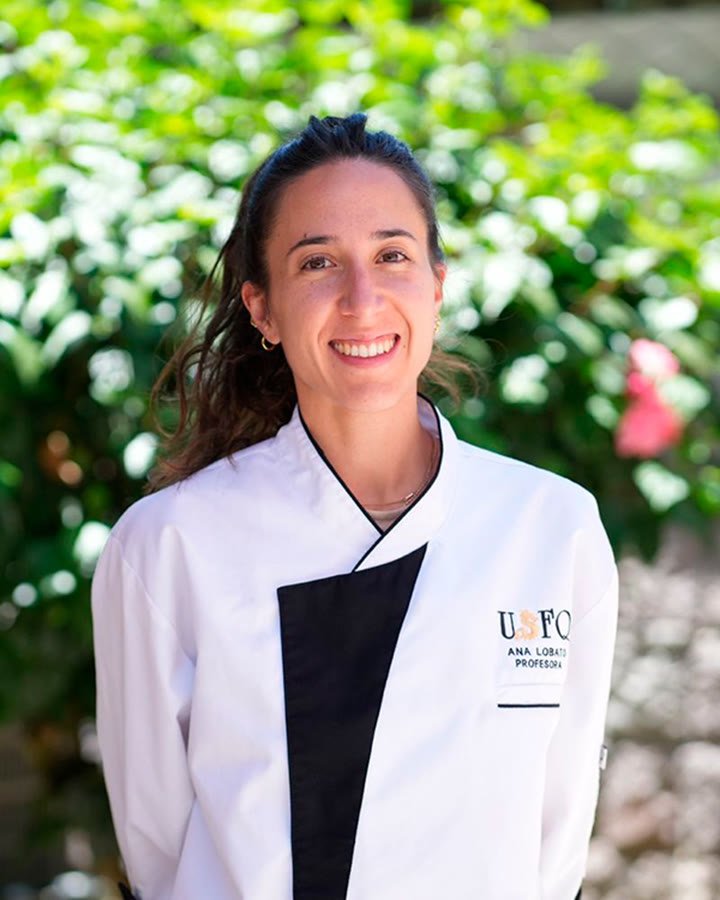
I want to start with the economy. The agri-food sector accounts for 16% of GDP in Ecuador and 13% in Spain, but the makeup is very different. In Ecuador the agricultural sector (8%) and the food industry (7%) weigh more, while hospitality and restaurants contribute barely 1%, compared with 7% in Spain. In other words: we produce, but we still do not turn that wealth into gastronomic value.
That is why I propose thinking about the “ingredients of success” of a gastronomic project, which I group into three. The first is identity: determination, personality, concept, value proposition and vision. The second is people: team, training, research, knowledge and talent. The third is management: planning, organization, numbers, finance and cash flow. Innovating does not depend only on creativity; it also depends on knowing how to listen, organize and sustain a project over time.
 Panelist
Summary of the talk
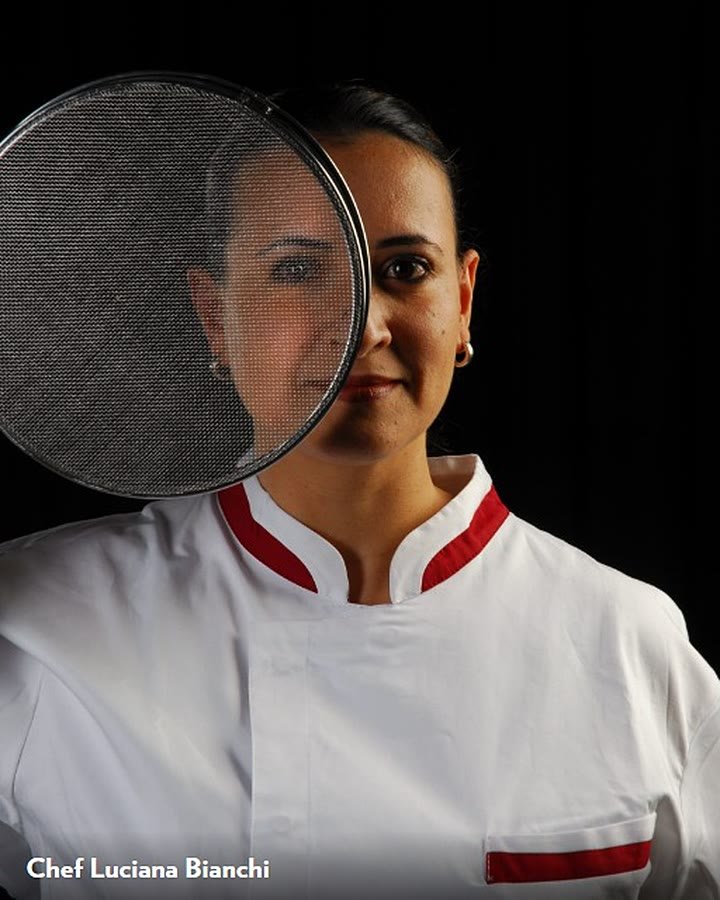
For me, science is a tool for survival. Between 2017 and 2025 I ran MUYU restaurant and bar in the Galápagos, a pioneer in creating a Galápagos cuisine, a project that generated a thesis with the Basque Culinary Center and that was a hub of sustainable ideas and socio-educational projects. Since 2020 we have worked at MUYU Zero Waste Lab on sustainable R&D and circular economy, with applied-science projects alongside the community, such as the full use of cassava. In 2024 we took part in the Science & Cooking World Congress expedition to the Galápagos. Researching is an act of resilience; applying knowledge and protecting life are acts of responsibility.
Our 2026 agenda focuses on discards and alternative proteins: a plant-based project with a healthy-practices space, the replacement of eggs, animal fats and milks in baking, and a new line of alternative proteins. They are joined by the organic farm Munay and the bakery Kachi Tanta, a women’s empowerment project. The lessons we learn are simple: put ethics and humanity before money, because not everything that has value has a price; reconcile with nature, with real food and with culture; and remember that without natural resources there is no gastronomy to preserve and no future to feed. That is why I say: devolve to evolve.
 Panelist
Summary of the talk
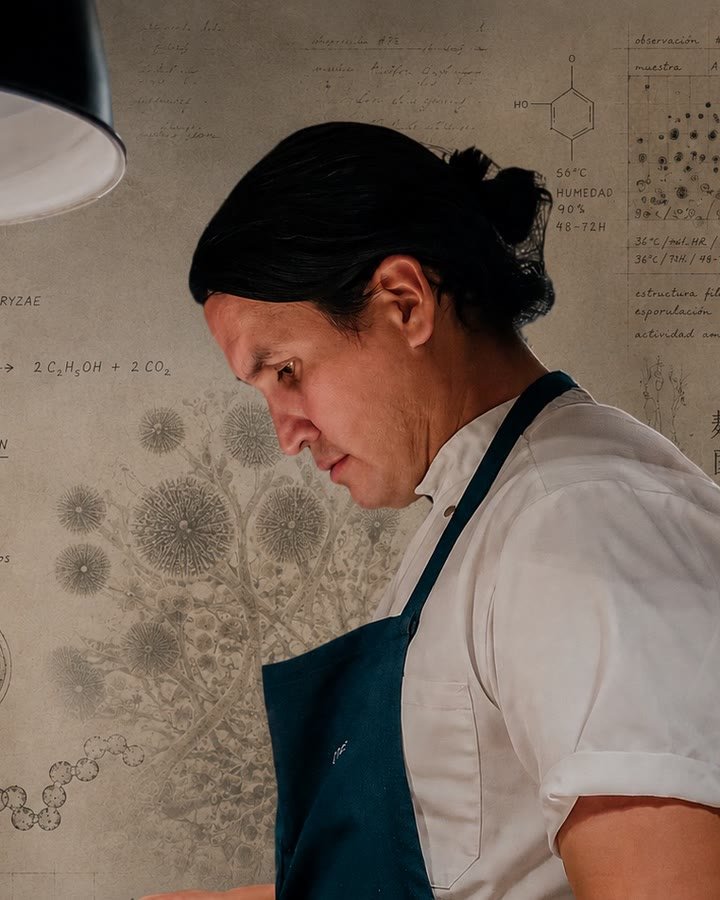
I want to start with a question: what does a cook really do? Just cook? I believe hands are not enough: you have to read, observe, connect and question. And what if the most important ingredient were knowledge? I am not talking about information, but about transformation. In Mugaritz’s R&D I learned to ask questions, and I understood that researching is not answering: it is learning to live with doubt.
From Cuenca I work with two projects. Paralelo I+D thinks: it asks, connects and designs. Erretz experiments: it is a living laboratory where an idea becomes a test and the test, learning. I am interested in the garden that also researches (territory, seasonality, biodiversity), fermentation as a conversation with time (kombucha, koji, miso) and the producer as teacher, whom we must listen to before intervening. Cooking is no longer enough: we must also research, design, teach, manage and connect. The more I learn, the less I know, and that is good news. The question I leave you with is not what dish we want to make, but what knowledge we want to leave behind.
 Panelist
Summary of the talk
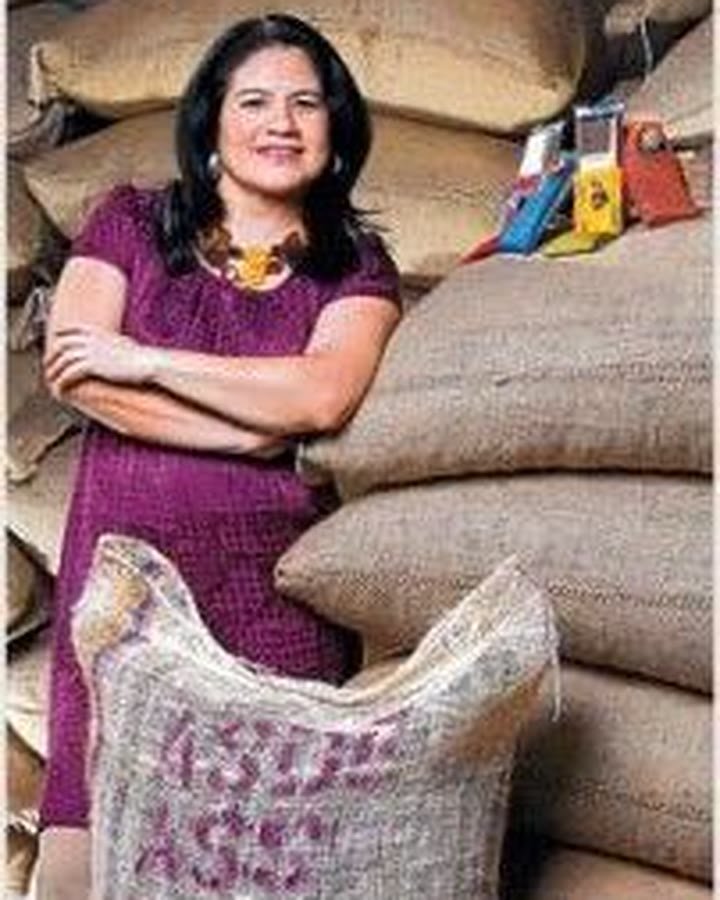
I want to show you that cacao has roots on our coast. Recent residue-analysis studies (Zarrillo et al., 2018) found cacao molecules in archaeological objects of the Valdivia (around 3500 BC), Machalilla, Chorrera and Jama-Coaque cultures. And surely it was these cultures, sailing the Pacific on their rafts, that carried cacao from Manabí to Mesoamerica.
Then I want to follow cacao to Europe. I will show you a 1744 manuscript, the oldest surviving chocolate recipe book, exhibited at the Museo de Bellas Artes de Valencia, and the sea route between Guayaquil and Cádiz. What seems most important to me is that, for the first time, the recipe books distinguish the origin: they no longer speak of “cacao de Indias” but specifically of “cacao de Guayaquil”, the one the nobility asks for.
 Panelist
Summary of the talk
The Manabí oven is more than a hearth: it stands at the intersection of three worlds. Archaeology, because it is a millennia-old legacy of cultures such as the Manteña and that of Japotó; excavations at Japotó and Tacamaz reveal buried vessels, volcanic stones to retain heat and remains of corn, peanuts, squash and fish, the base of pre-Columbian viche. Engineering and chemistry, because it is applied thermodynamics. And matriarchy, because it is the core of the cholo and montuvio identity, where women run the economy and family cohesion. The oven went from clay pots buried in the ground to a box of guayacán or mahogany raised on four posts, filled with clayey earth and ash, with one to four clay wells, the hanging cusabaraja for smoking and the soto for stoking the embers. They raised it for the cook’s comfort, to protect the food from animals and to integrate it into the rural home.
I study this oven as an open thermodynamic system: firewood, oxygen and raw food go in; the mass of clay and ash acts as a thermal battery that charges during the firing and discharges slowly; and heat is transmitted by conduction, convection and radiation. To test it we measured an overnight cooking of pork bollos: 60 units and 4,400 grams of dough, in a pot sealed with plantain leaves, lid and ash, which becomes a pressurized steam chamber. The temperature dropped from 120 °C at dusk to 70 °C at dawn, and after six hours the system lost barely 100 grams, 2.2% of its mass: it retained 97.8% of the moisture. That curve lets the plantain starch gelatinize without drying out and the pork collagen melt into gelatin. My conclusion is that the matriarchs of Manabí, without thermometers or scales, did not just develop a recipe: they designed and mastered a precision thermodynamic process that modern science is only beginning to quantify.
 Panelist
Summary of the talk
We start with a question: how many Amazonian ingredients do you use? From Canopy Bridge Food Lab, in Archidona, we work to bring them from the forest to the table. Here are a few: cachama (Piaractus brachypomus), macambo or white cacao (Theobroma bicolor, patas muyu) and guaba ilta (Inga ilta). In the latter, our research found more protein, less fat, the presence of phenols and antioxidant capacity.
We want to share our R&D methodology, which takes an ingredient from the assessment of its value chain to the market. We start with ideation and validation with stakeholders. Then we screen the ideas according to our values, their viability and their impact. We prototype with experimental design and intuitive cooking, validate with focus groups and reformulate. We carry out the economic and supply-chain assessment, test a minimum viable product on the market and, in the end, incubate or accelerate it. We believe in R&D laboratories as work articulated at the national level.
 Campaign
Summary of the talk
We all say it with pride: I am manabita. But what does that word mean for the producer whose effort is haggled over, for the fisher who cannot bring food home, for the young person without work on the land that raised them, for the keeper whose knowledge is fading like firewood? We are a World Region of Gastronomy 2026 and, even so, our knowledge is fading.
That is why we made Horno de Saberes: we got together to listen to each other, talk to each other and understand each other over six days, in five cantons, with four voices. We created a method that can travel: ignite, listen, problematize, co-create and project. Our rule was to live first, communicate afterward. That is how “Qué rico es Manabí” was born: no agency invented it, we wrote it ourselves. We want Manabí to be consumed in Manabí, in Ecuador and in the world, betting on local consumption and circular economy. Businesses can be allied brands, producers gain direct sales, spokespeople have a voice and a platform, and institutions, a replicable model.
 Panelist
Summary of the talk
I present the Science & Cooking World Congress Foundation, a non-profit organization working to develop the Manifesto of Scientific Gastronomy, agreed in Barcelona in 2019. To do so, we organize the Science and Cooking World Congress in Barcelona every November, promote meetings in other countries through our delegations and carry out research and training activities. Our vision fits in one sentence: science has changed gastronomy; now, it can change society.
That is why we signed an alliance with Fundación FUEGOS. Together we want to build a reference structure for the research, application and transfer of scientific-gastronomic knowledge in the service of society. Our goal is to develop and disseminate gastronomic research, with rigor and prestige. The dialogue between science and cooking enriched modern gastronomy; now it must help improve everyday food for everyone.