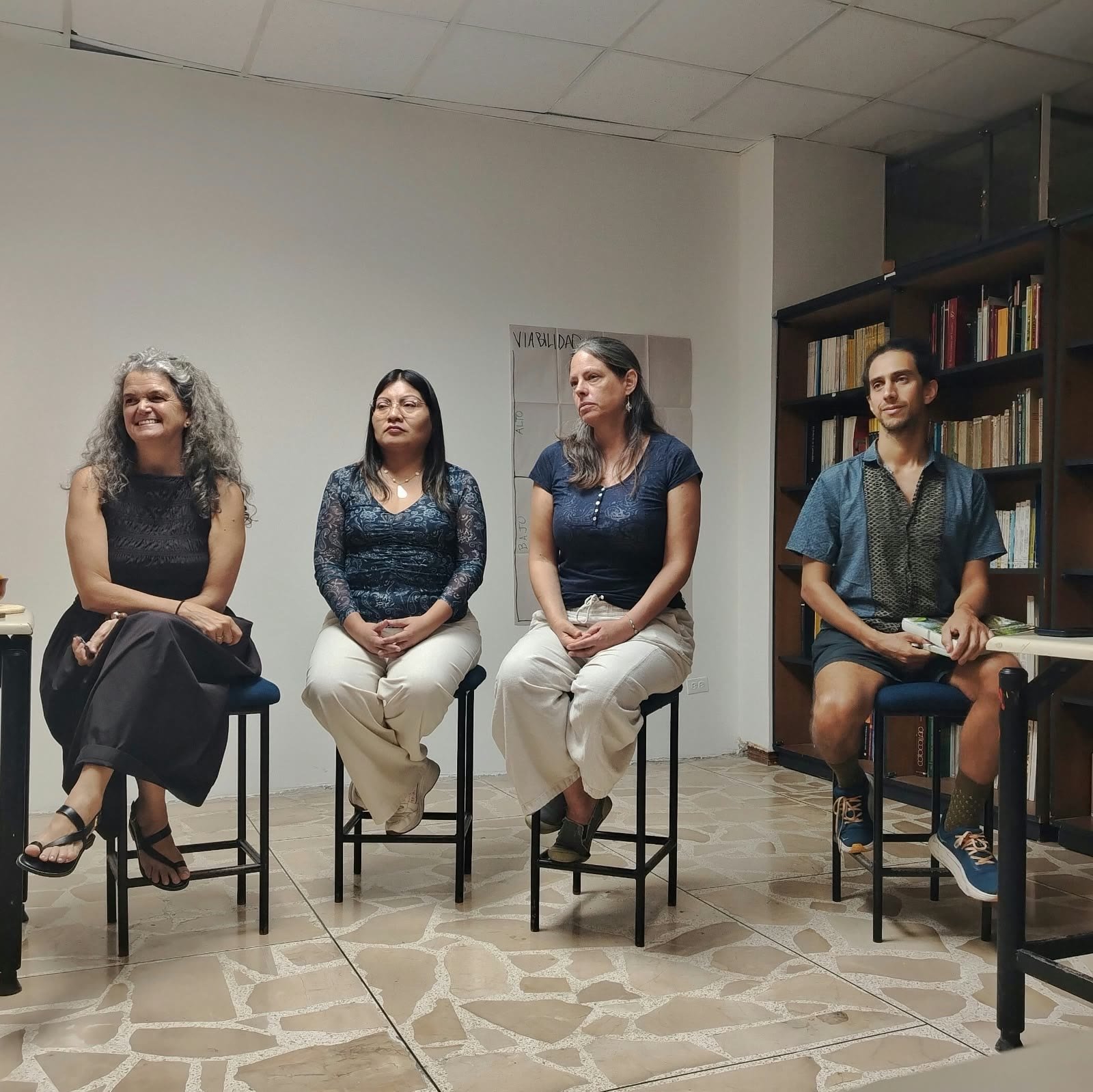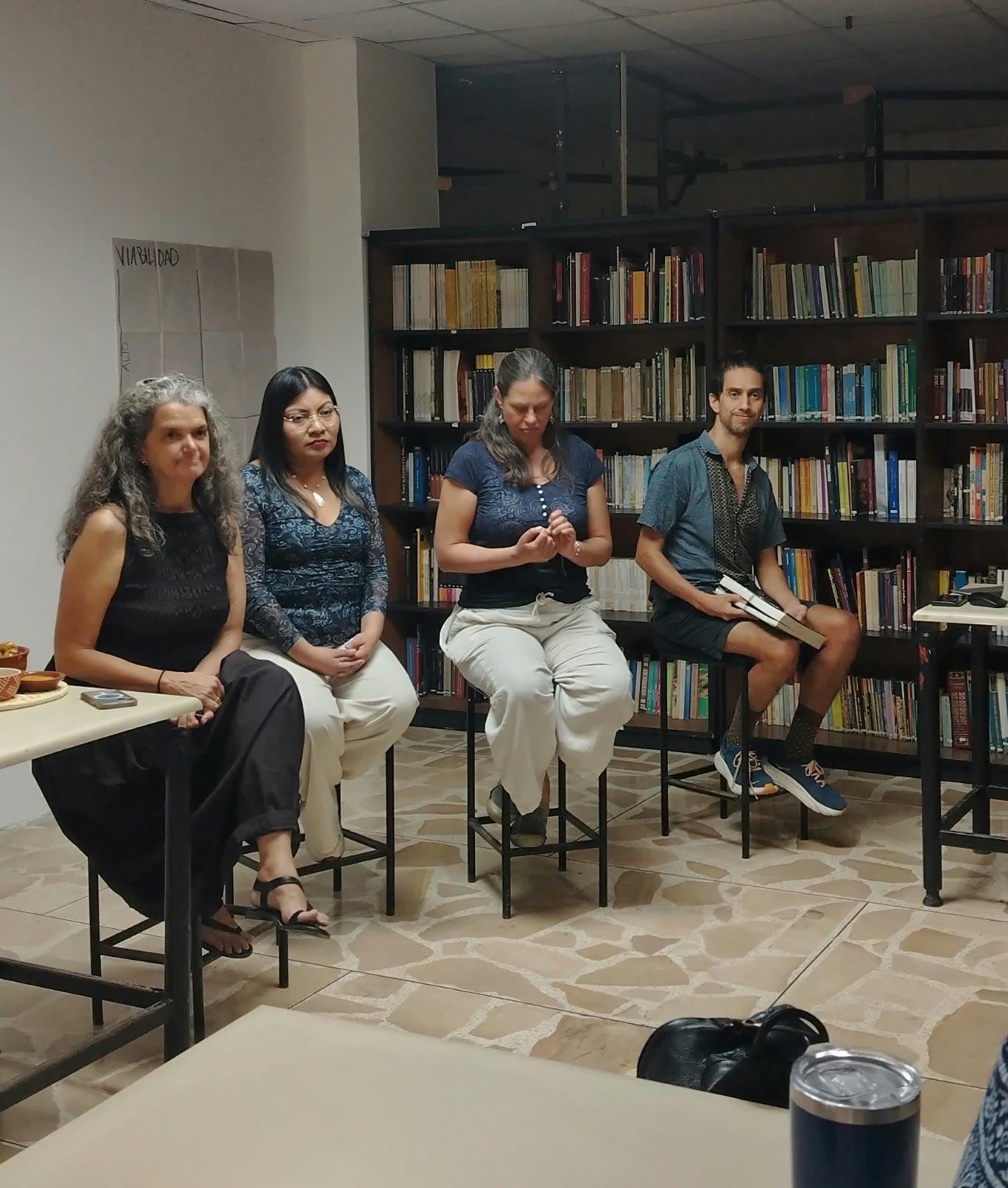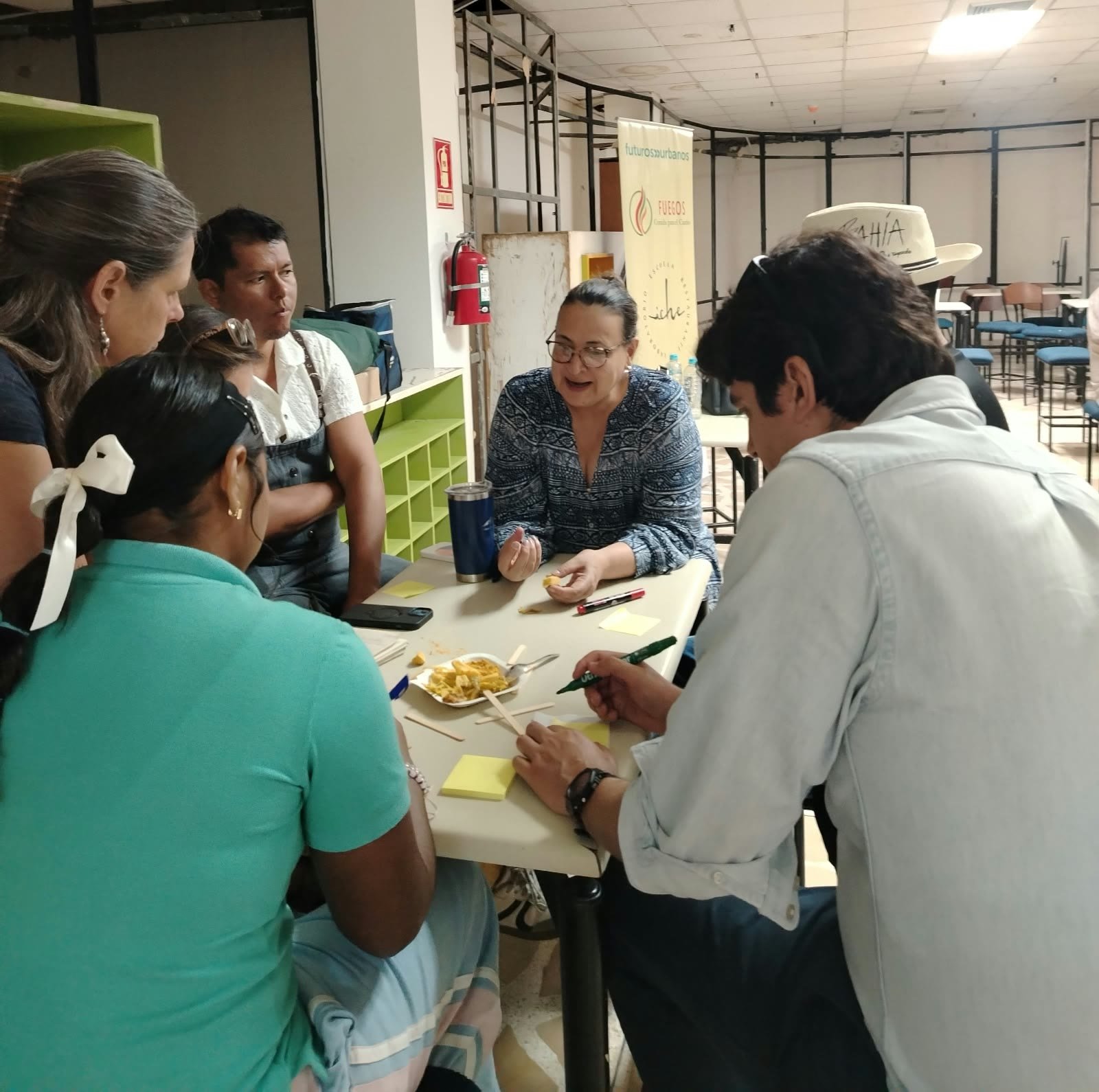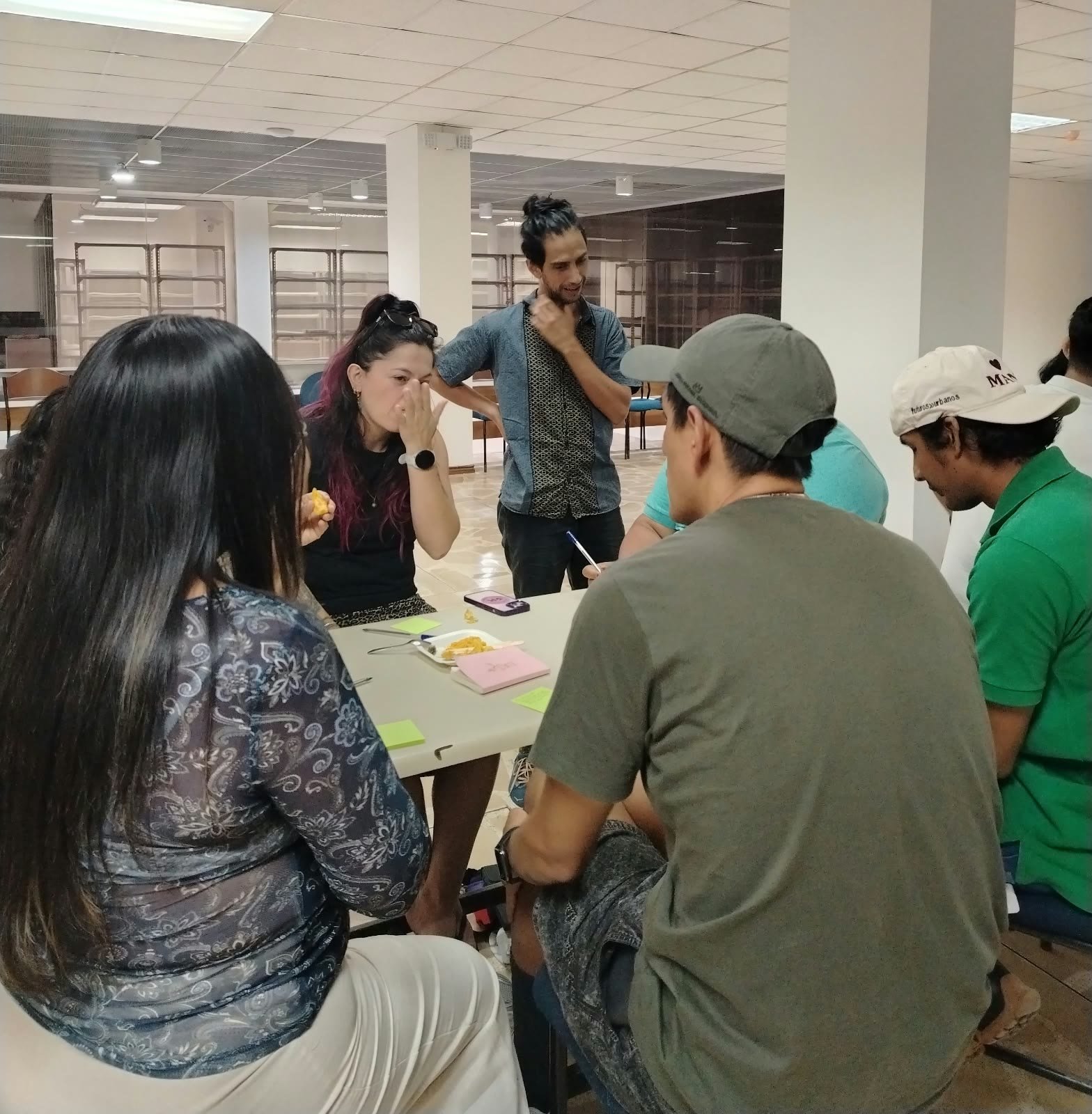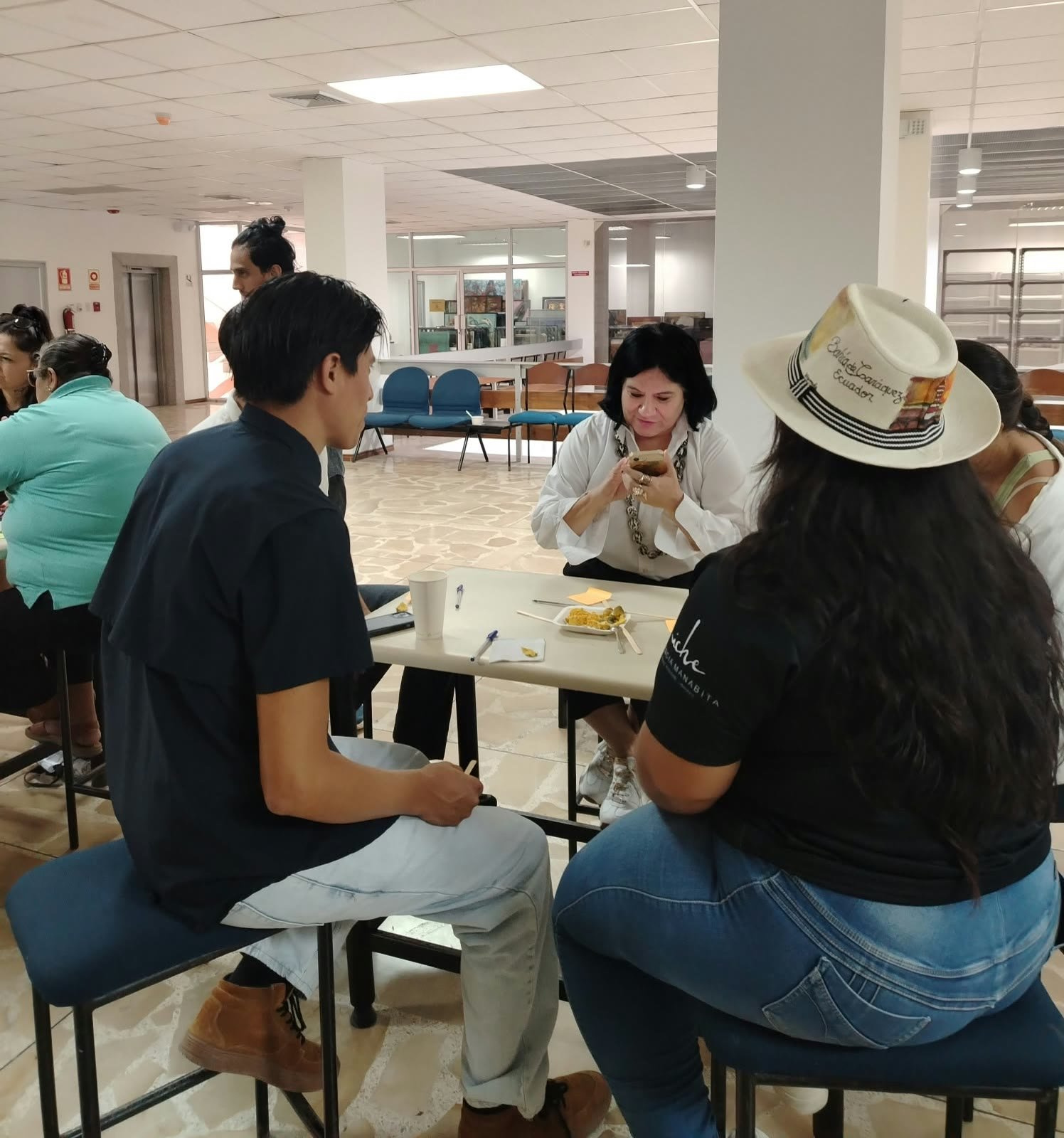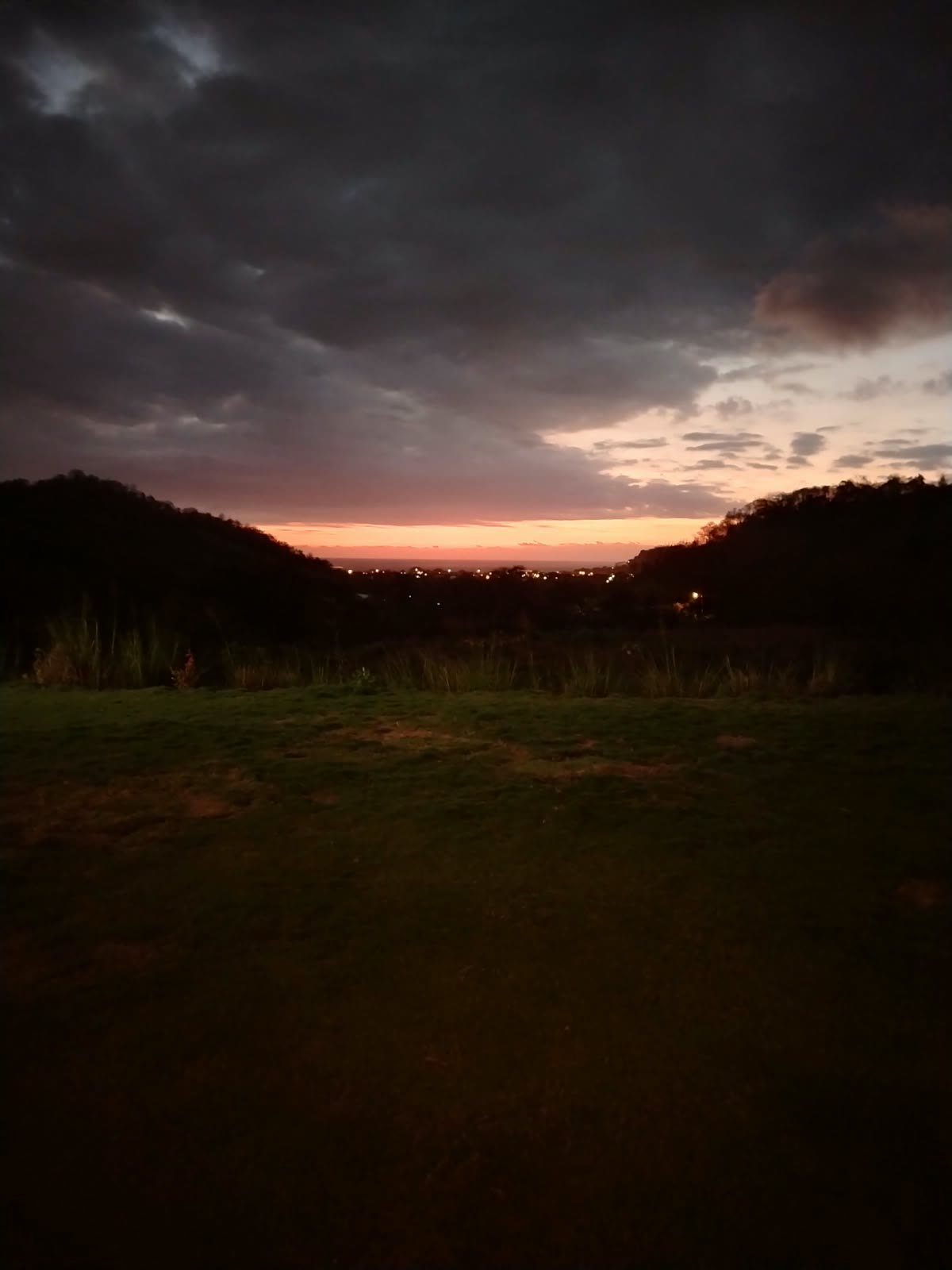
The network’s members —Iche Lab, Hacienda Zuleta, Canopy Bridge, Salinerito and Amisacho— shared the research agendas they are developing and talked about the future of food, in a museum that safeguards an archaeological heritage of more than four thousand years of the region’s history.
See the venues on the map →A table among vessels
In Bahía de Caráquez, facing the Chone River estuary, there is a museum that holds more than four thousand years of history. There, among clay pieces made by people who also cooked, sowed and saved seeds, a network sat down with something similar in mind: to think about what Ecuador will eat tomorrow starting from what it already ate yesterday.
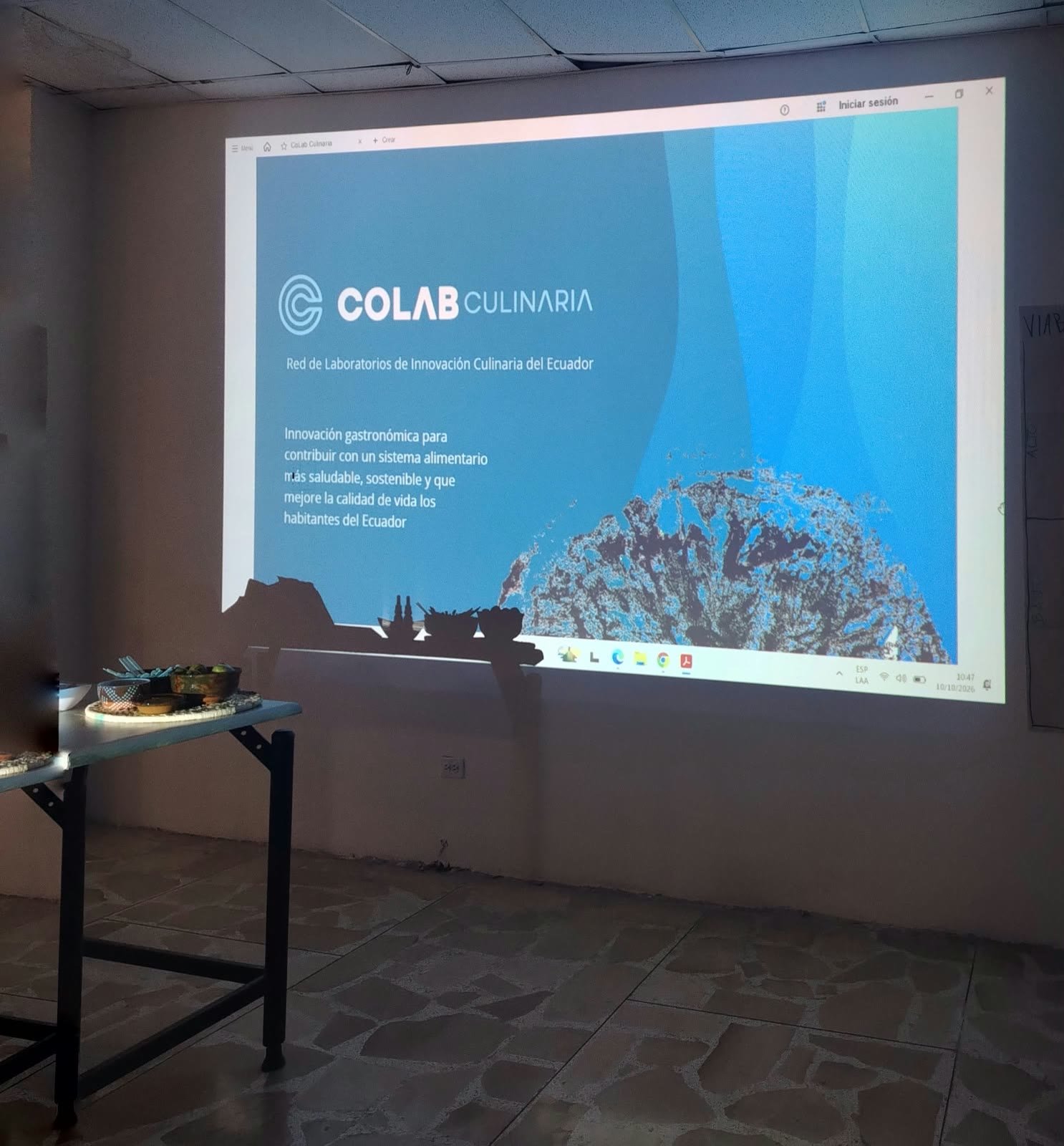
The network is called Co-Lab Culinaria. Its long name is Network of Culinary Innovation Laboratories of Ecuador. Its purpose fits in one line that they repeat unashamedly: gastronomic innovation for a healthier, more sustainable food system that improves the lives of those who live in this country. That morning, Iche Lab, Hacienda Zuleta, Canopy Bridge, Salinerito and Amisacho arrived. They came to tell what they are researching.
+600
food and culinary heritage ingredients identified in the country (Patrimonio Alimentario del Ecuador inventory, 2017)
+4.000
years of history held by the museum that welcomed the network
The starting point is a figure and a complaint. The figure: more than 600 food and culinary heritage ingredients identified in the country, according to the 2017 Patrimonio Alimentario del Ecuador inventory. The complaint: that pantry is unique in the world and yet it is undervalued. The network does not aim to cover all of it. It aims to choose a group of emblematic ingredients and work on them in depth, because —they say— the strength of a gastronomy begins with its ingredients: in their quality, in their diversity and in the stories that allow us to innovate, feel pride and reach the world.
The goal takes the form of a long, ambitious sentence: to transform Ecuador’s biodiversity and food heritage into an engine of local development and international recognition. Beneath that sentence there are three concrete tasks.
Identify the traditional ingredients with the greatest potential and lay the groundwork for research and development projects.
Spread them through audiovisual media and through well-known cooks and chefs.
And build an ecosystem: a shared platform where chefs, producers, companies, communities and academia meet.
What each laboratory researches
Iche
Iche was born after the April 2016 earthquake, the one that split this very coast. It was driven by Fundación FUEGOS with a simple conviction: that food could turn a crisis into an opportunity. Today it is a school, restaurant, incubator and laboratory. It researches local ingredients and their transformation possibilities, documents ancestral Manabí techniques and develops prototypes with territorial identity, sensory quality and commercial viability. Its dream has proper names: that those who produce peanuts, corn or pechiche share in the value their products reach, and that young people and women find in food innovation a way to stay in their territory.
Canopy Bridge
It was born in 2022 to turn the diversity of Amazonian ingredients into products that improve community incomes and, at the same time, help conserve the forest. It has worked with more than thirty ingredients and has brought several to market as finished products. In Archidona it has a tasting room: a table where chefs, buyers, researchers, community members and the curious taste what the Amazon has eaten for centuries.
Amisacho Lab
Its work begins before the kitchen, up in the palms. First it identifies where wild palms grow. Then it faces its greatest challenge: the climbers who go up to harvest the fruit, to whom it provides equipment and training. In the laboratory it standardizes processes, measures brix, calculates volumes per season and defines presentations and prices for morete, ungurahua and açaí pulps. With Canopy Bridge it runs tests and prepares technical sheets so that chefs and customers know what they have in hand.
Hacienda Zuleta
Together with the Galo Plaza Lasso Foundation it is the network’s youngest member, although its history is long: dairy has been made there since 1898. It joined Co-Lab to recover grandmothers’ knowledge and the countryside’s old recipes, and to build with them a Zuleta gastronomic identity. Its first steps were a census that located at least thirty food businesses in the area, the incorporation of local Andean products into the hotel’s menu and the start of its own kitchen of innovation and production.
The mountain · Urku Mikuna
From Bolívar, Urku Mikuna —food of the mountain— works with grains, roots, tubers, herbs, dairy and Andean honeys alongside producers and universities. Its bet is that the diversity of the mountain becomes brands, products and projects with a future.
What the day leaves behind
If the session had to be summed up in a balance, it would be this. The network already has three research and development laboratories up and running: Iche, Canopy Bridge and Urku Mikuna. It has already produced more than forty products. It already has a book,Ingredients of the Ecuadorian Pantry as Catalysts of National and International Gastronomy. And it has already grown: it added Amisacho and Hacienda Zuleta, and began to articulate collaborations between laboratories, such as the one that links Amisacho with Canopy Bridge.
3
research and development laboratories up and running: Iche, Canopy Bridge and Urku Mikuna
+40
products made by the network
1
book on the ingredients of the Ecuadorian pantry
2
new members: Amisacho and Hacienda Zuleta
The strategy
The strategy rests on three legs, and the conversation kept returning to them.
Some common ideas about the future of food emerge from the shared agendas.
That innovation does not begin on the plate but in the territory, in a census of businesses in Zuleta or in a climber going up a palm in Sucumbíos.
That value has to return to those who produce it, whether peanuts in Manabí or morete pulp in the Amazon.
That conserving and eating are not opposite verbs, and that a forest can be cared for by selling what it gives.
That memory —grandmothers’ recipes, ancestral techniques— is raw material as much as corn.
Outside was the estuary. Inside, the vessels of those who cooked here four thousand years ago. Between one and the other, a network of laboratories debated how to make what this land has always known how to give finally becomethe future.Co-Lab Culinaria · Bahía de Caráquez Museum
The day in pictures