
10 min read
Manabí, where cooking has a lot to tell the world
A personal chronicle about Manabí, the encounters that gastronomy leaves behind and the potential of a country that still has a lot to show about its culinary wealth.
By Lizeth Mosquera, communications team of the Americas Young Chef Award
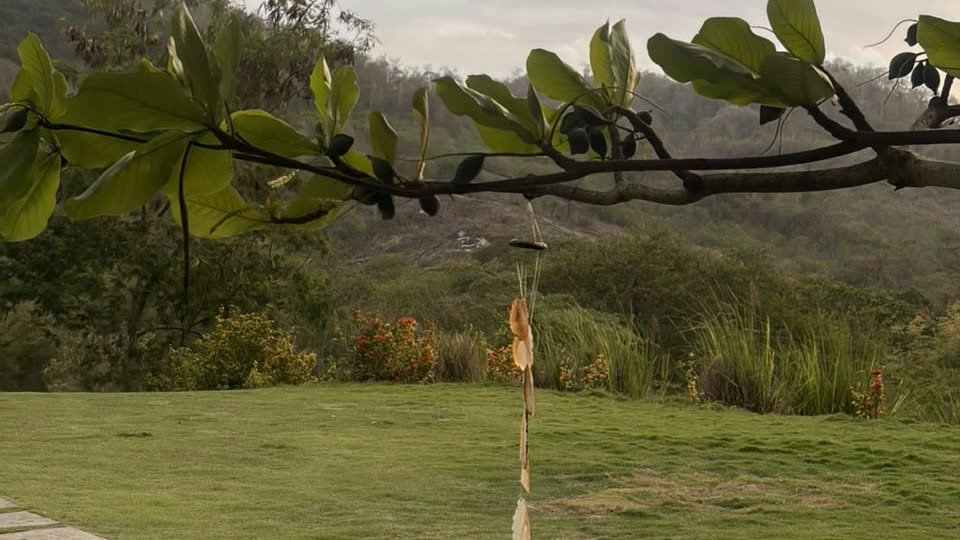
When I arrived at Iche, the sun was beginning to set among the trees of San Vicente, in Manabí. I had climbed the stairs leading to the complex, passed under an arch of palm trees and discovered a landscape that seemed to stretch as far as the eye could see. Behind me, small pieces of shell hanging from a tree swayed in the wind. In front of me were a school, a restaurant and a project that was turning Manabí’s gastronomy into an international meeting point.
I had come to work on communications for the Americas Young Chef Award, which from October 7 to 13, 2026 brought together young cooks from different countries of the continent in Manta, Bahía de Caráquez and San Vicente. I did not yet know that, over the following days, I would end up translating in a kitchen for an American participant who had had a difficult night, talking about science and food with a Harvard researcher and discovering how much a territory can tell through its food.
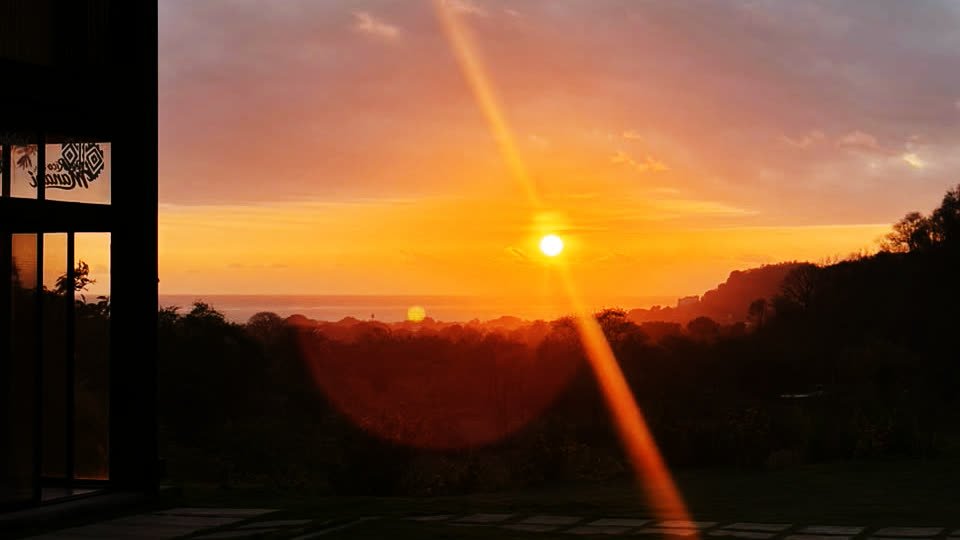
The sunset on that arrival was hard to forget. The sky blended orange and blue tones over an expanse of vegetation that seemed endless. A huge tree near the entrance shaded a couple of chairs from which you felt like staying to contemplate the horizon.
But the most interesting thing about Iche lay beyond the landscape.
Its facilities bring together a restaurant, a gastronomy school and spaces devoted to culinary research and innovation, as well as a vegetable garden. Its approach starts from an idea with much broader implications: recognizing the value of Manabí cooking and turning that knowledge into training and development opportunities for the territory.
During the gathering, young cooks, researchers and international specialists shared experiences around gastronomy, food heritage and innovation. And behind those conversations were stories that would hardly fit into the official program of a competition.
A gecko in the kitchen
Landen Hickman had come from the United States to compete. His participation was marked by several setbacks: some of his ingredients did not arrive on time, and the night before the competition he felt unwell and had to rest.
Even so, the next day he was in the kitchen. I was assigned to help him with translation, because he needed to communicate with the local team. From there I was able to accompany part of his preparation and watch how he faced a day that, after everything that had happened, was already demanding enough.
Then, while he was arranging his utensils, a gecko appeared next to his workstation. Landen stopped what he was doing for a moment, picked it up carefully in his hands, looked at it, smiled and went out to the patio. There he left it on the grass, took a photograph of it and came back to continue his preparation.
It all happened in a few minutes. There was no annoyance and no drama. Just a simple gesture of respect toward a small animal that had appeared where no one expected it. I was struck by the way he acted. Sometimes the smallest details reveal aspects of a person that rarely come up in a conversation.
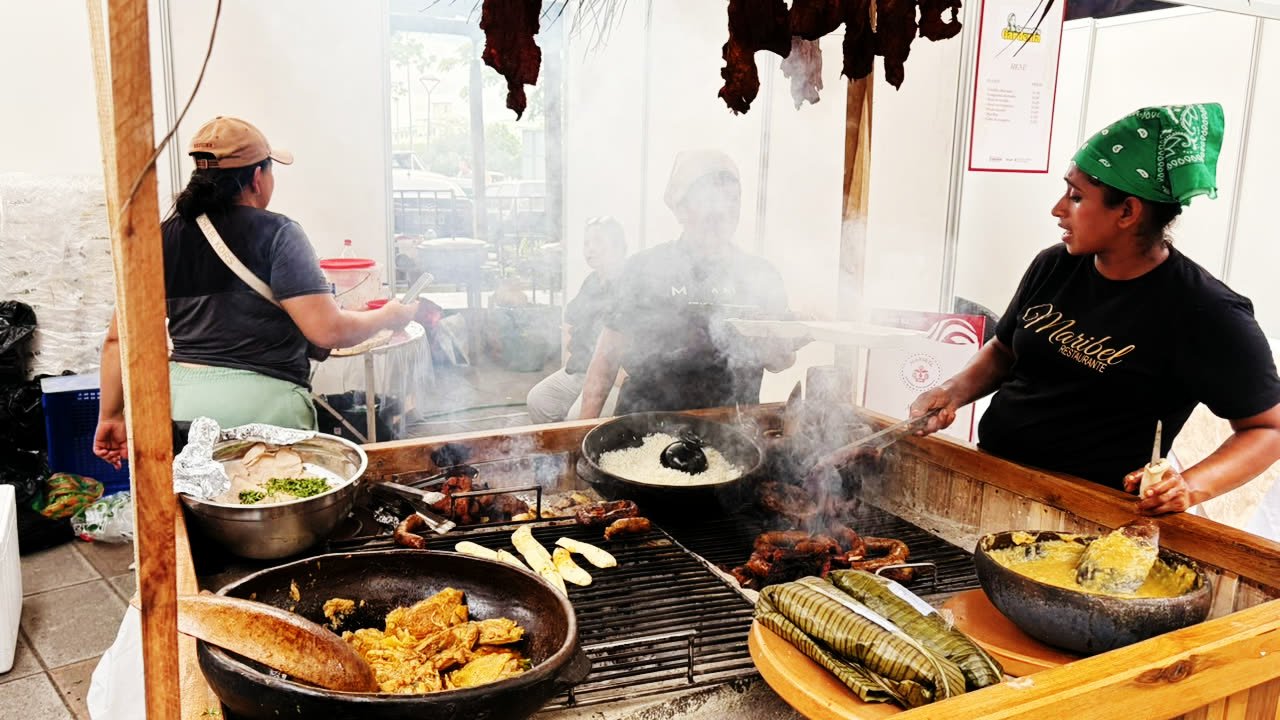
Landen also chose to work with Ecuadorian ingredients and to use the Manabí wood-fired stove, a traditional cooking tool whose history is closely tied to the food practices of the province.
Traditionally, this stove brings together clay, ceramics and ash around the wood fire. Its importance, beyond preparing food, is that it gathers knowledge about handling fire, materials and culinary techniques that have been passed down through generations.
Seeing an international participant bring this tool into a contemporary competition showed how tradition can enter into dialogue with innovation without losing its identity.
The wealth that begins before the dish
In Ecuador we know that Manabí is one of the great references of our gastronomy. Its dishes and its use of peanuts, green plantain, seafood and its cheeses are part of a widely recognized culinary identity. However, traveling through the territory reveals that behind those flavors there is a much more complex network of knowledge and trades.
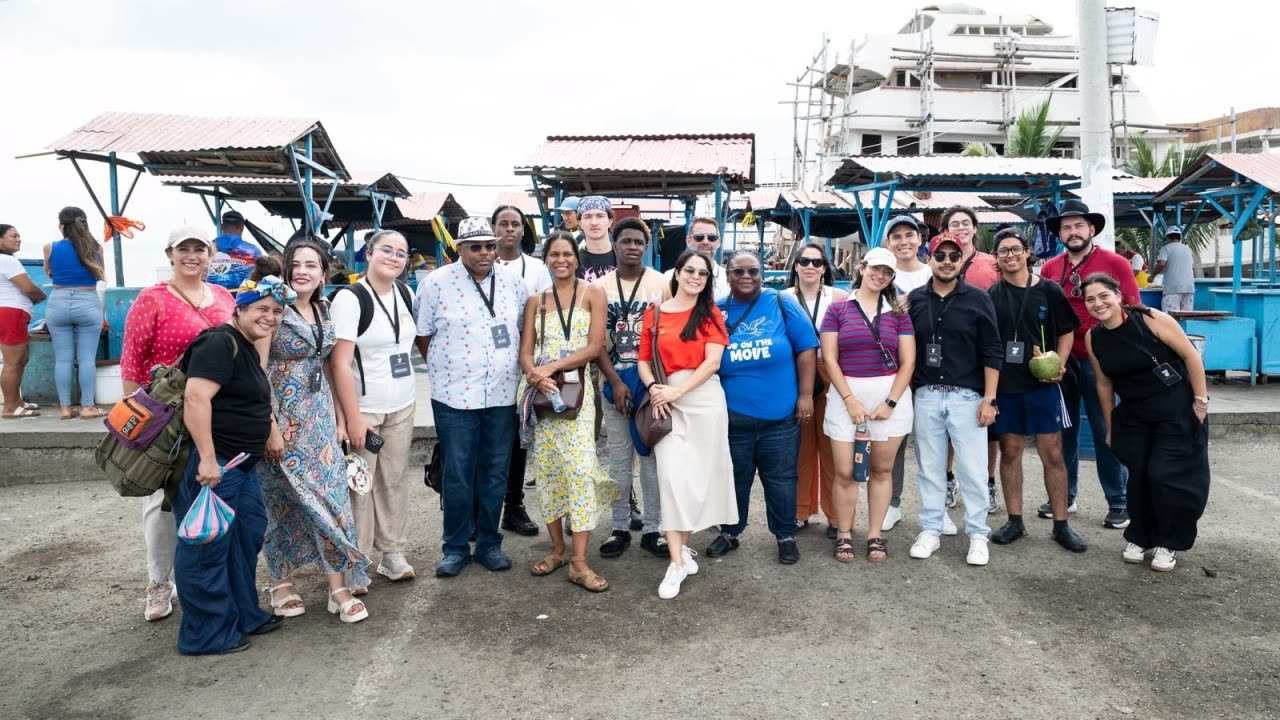
A visit to the Playita Mía seafood market, in Manta, was enough to prove it.
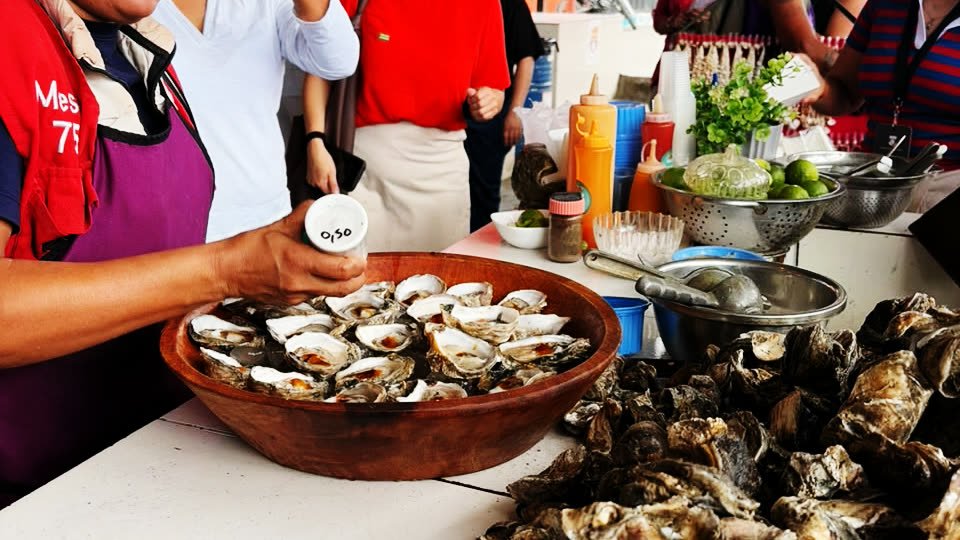
The variety of products was impressive: octopus, huge squid, shrimp and prawns that seemed to approach the size of a face. At the stalls, seafood filled the space with an abundance that is hard to appreciate in the same way when it arrives served at the table.
That scene also invited us to look at those who sustain that wealth: fishermen, merchants and families who are part of the province’s food chain. They are joined by Manabí’s traditional cooks, women who have preserved techniques and recipes through everyday practice. Their knowledge is an essential part of the local gastronomic heritage. That relationship between territory and knowledge is one of the aspects of Iche that interested me most.
Its vegetable garden, its cellar and its gastronomic spaces are part of an approach that seeks to experiment with local ingredients without severing them from their origin. Even the cocktail program incorporates local products in preparations that explore other flavor possibilities.
During a meal at Iche I tried a caldo de bolas de verde, a green plantain dumpling soup. It was one of those dishes that remind you why traditional Ecuadorian cooking is so capable of surprising without the need for great artifice. Innovation does not necessarily mean replacing the familiar. It can also mean researching its possibilities, recovering techniques and finding new ways to share them.
The people behind the knowledge
One of the researchers who caught my attention most was Mexican chef Lalo Plascencia, international judge of the Americas Young Chef Award and panelist at the Gastronomic Research Meeting. He approaches gastronomy through research and reflection, with a curiosity that tends to lead conversations toward broader questions about food and culture. He has a particular way of explaining complex concepts, sometimes from almost philosophical perspectives, but without losing his humor or warmth.
Talking with him was especially interesting because of his view of Ecuador. From his experience, he recognized the value of our products and gastronomic knowledge, as well as the possibilities that still exist to give them greater international visibility.
I was also able to talk with Pia Sörensen, lecturer in Harvard University’s Science & Cooking program, international judge of the Americas Young Chef Award and panelist at the Gastronomic Research Meeting. Before meeting her I imagined a much more formal conversation. Instead, I found an approachable person, interested in listening and sharing experiences. We talked naturally, exchanged questions, and the conversation flowed without her academic career imposing any distance.
Gastronomy has that ability to bring together, in the same conversation, people who come from very different disciplines, countries and experiences.
I also saw it with the young participants.
Jovan William, a contestant from Martinique, invited me to taste his preparation. It was a chance to get closer to his culinary proposal through a direct exchange with the person who had made it. At another moment, Erecia Hepburn, mentor of Dedrick Taylor Jr., a contestant from the Bahamas, gave me some coins from her country. An unexpected detail that became another memory of the exchanges that arose during those days.
Francisco Guitard, observer for the United States team, for his part traveled to Montecristi in search of ceramic pieces and toquilla straw to present the dish in the competition. His journey showed how a gastronomic proposal can connect with the crafts and other knowledge of the place that hosts it.
At the Valentina Colibrí restaurant, run by Gloria Chávez and her daughters, we shared dishes of Manabí cooking while traditional dances from northern Manabí were performed, another example of how cooking and other cultural expressions of the province can meet in a single experience. Not all cultural connections need grand speeches. Sometimes they begin with an ingredient, a dish someone offers you to taste or an object that travels from one country to another.
A corviche by the sea
Between the workdays and the activities of the gathering, there was an afternoon when we ended up doing something quite simple: sitting by the sea.
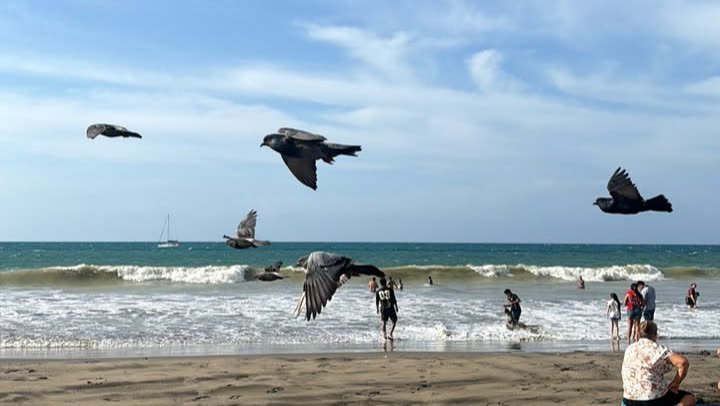
There were five of us. Among them were Lalo Plascencia and Francisco Guitard, the two international visitors in the group. We had spent much of our time between gastronomic activities and decided to take the opportunity to try something that could not be missed on the coast: corviche and emborrajado.
Earlier we had had lunch at the Casa Rosada restaurant, in Manta, where we tried several dishes, including a corviche. Then, on El Murciélago beach, we tried the version sold by the sea. The contrast between the two was striking, but both had their charm. I like that aspect of gastronomy: the same dish can change depending on who makes it, where it is sold and what story lies behind its recipe.
That day I also took a few minutes to walk along the beach.
It had been a long time since I had felt the sea and, although I was in Manabí for work, I did not want to leave without doing it. I took off my shoes and walked to where the waves reached. It was around four in the afternoon. Birds moved along the shore and the water advanced gently until it covered my feet before returning to the sea. It was just a few minutes to take in the landscape, feel the water and enjoy being there.
Sometimes the clearest memories of a trip appear precisely in those pauses.
Ecuador is also told through its cooking
I have had the opportunity to get to know the gastronomy of other countries, and I enjoy discovering how people eat, what ingredients they use and what stories lie behind their recipes.
But Ecuadorian cooking keeps surprising me. We are a small country with extraordinary food diversity. The dishes of the Coast, the Highlands, the Amazon and Galápagos let you travel through traditions, products and ways of understanding food that change radically from one region to another. That wealth has stayed with me even when I am far from Ecuador.
In Turkey I made a seco de pollo, a chicken stew, for someone who had never tried our food. I remember their curiosity as they watched the process and their surprise at discovering the flavor of the dish. In New York I cooked a locro de papa, a potato soup, even though I did not have all the ingredients I would have wanted. And in India, when I was asked to prepare something Ecuadorian, I improvised a vegetarian option with green plantain and a mushroom sauce.
None of those dishes claimed to represent our entire gastronomy. They were small ways of sharing it. But it made me happy to see that a dish could spark curiosity about a country that some of those people did not yet know.
That same motivation is what led me to accept the invitation from María Alexandra Benalcázar, production coordinator of the Americas Young Chef Award, to join the communications team for the gathering. We had already worked together and, when she told me about the project, I saw an opportunity to help show Ecuador through one of its most valuable heritages. During those days I also worked alongside people who made the activities possible, among them Rebeca Donoso, of the hospitality team, whose willingness and companionship were an important part of the experience.
My work involved communications, public relations and coordinating media and content needs. But being close to the activities allowed me to observe situations that do not always appear in the official photographs or in the results of a competition. The story of Landen and the gecko was one of them.
A conversation worth continuing
The Americas Young Chef Award brought together in Manabí international participants and specialists who came to exchange knowledge about gastronomy. But the value of an experience like this also lies in what happens around the competition: in the conversations with the cooks, in the work of the women who preserve traditional recipes, in the markets, in ancestral techniques and in the curiosity of those who discover ingredients they had never tasted before.
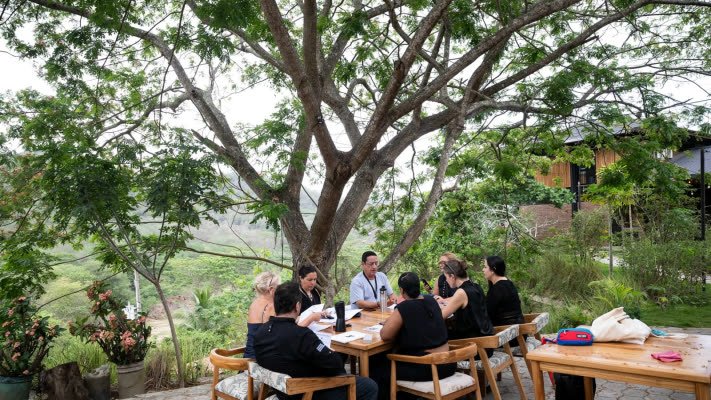
Iche is an interesting initiative because it connects those dimensions with training, research and opportunities for territorial development. I am happy that Manabí has a project of this kind. And I would like there to be more initiatives capable of researching, preserving and projecting the gastronomic wealth of other Ecuadorian regions.
We have stories, ingredients, techniques and people that deserve a much greater presence in the international gastronomic conversation. To achieve this we need more consistent and ambitious communication, capable of building experiences, creating content and connecting audiences with those who make our cooking possible.
I also believe that we Ecuadorians ourselves have a lot to discover. Sometimes we look for extraordinary experiences in other countries without fully knowing what exists within our own borders. From Manabí I take away new flavors, conversations, lessons and people who made this experience special. But above all, I take away the satisfaction of having helped, through my work, other people get to know Ecuador a little better.
Because every dish can open a conversation, every ingredient can tell a story and every encounter can become an opportunity to bring our country closer to the world.
Originally published on LinkedIn
Back to contents